How to Clean a Concrete Driveway
 Canberra Admin
How to Clean a Concrete Driveway: Oil Stains and Dirt
Concrete driveways collect dirt, tyre marks, leaves and oil over time. For everyday grime, start by sweeping the surface and using a cleaner labelled for concrete. Fresh oil spills are easier to treat than old stains, which may remain visible even after cleaning. The right approach depends on the condition and finish of the driveway. A plain concrete surface may tolerate a different method from exposed aggregate, decorative concrete or a sealed finish. Start gently, read product instructions and avoid using stronger chemicals or more pressure simply because a mark is stubborn.
How to Clean a Concrete Driveway
For general dirt and grime, you may only need an outdoor broom, a concrete-compatible cleaner, a nylon brush and a garden hose. Check the driveway first for cracks, loose coatings, exposed aggregate or areas that have started to crumble.
What you may need: a stiff outdoor broom, a nylon scrubbing brush (not a wire brush), a cleaner labelled as suitable for your concrete, a garden hose, and gloves or eye protection if the product label requires them.
1. Clear the area. Move vehicles, bins, pots and outdoor furniture. Sweep away leaves, loose soil and grit so they do not get pushed across the surface.
2. Identify the marks. Ordinary dirt, tyre marks, oil and organic growth are different problems. Choose a product for the type of contamination and the driveway finish.
3. Check the cleaner label. Follow its instructions for surface preparation, dilution, application and contact time. Do not assume every product should be applied to wet concrete, or that it can be used on decorative or sealed finishes.
4. Test a small, inconspicuous area. This is particularly important if the concrete is coloured, sealed, exposed aggregate or showing signs of wear. Stop if the finish changes unexpectedly.
5. Apply and scrub as directed. Work in manageable sections and use a nylon brush where appropriate. Avoid aggressive scrubbing that could mark a decorative finish.
6. Rinse as directed. Keep cleaning solution and dirty runoff away from garden beds and stormwater drains. Follow the product's disposal and rinse instructions.
7. Let the driveway dry before judging the result. Wet concrete often looks darker, so wait until the surface is dry before deciding whether a mark remains.
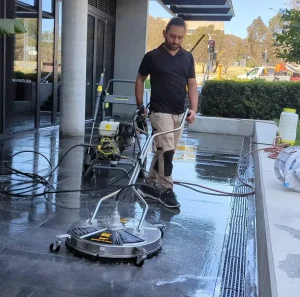
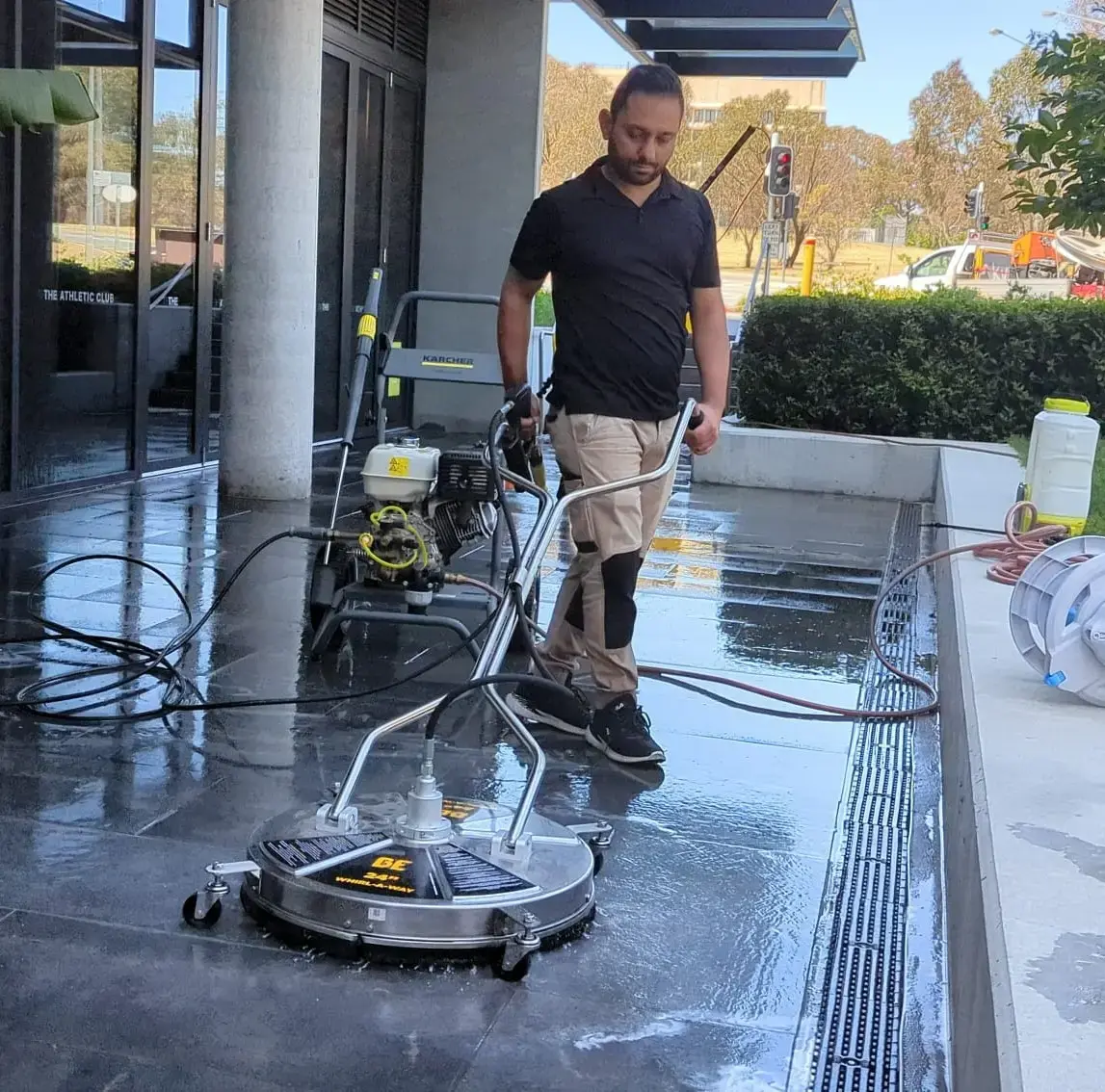
A pressure washer is not essential for every driveway clean. If you use one, follow the machine manufacturer's instructions, select a suitable setting and keep the spray moving. Excessive pressure or holding the nozzle too close can etch concrete, disturb aggregate or leave visible cleaning lines.
Responsible Driveway Cleaning and Stormwater Protection
When cleaning a concrete driveway, avoid allowing oil, detergents or dirty wastewater to enter stormwater drains. Follow responsible cleaning practices to help protect local waterways. Read this Australian guide to stormwater management for more information.
How to Get Rid of Oil Stains on a Driveway
Oil stains are among the most noticeable marks on a concrete driveway. The key difference is whether the spill is fresh or has had time to soak into the concrete.
For a fresh spill: keep people and vehicles away from the area. Use a purpose-made oil absorbent in line with its instructions, then collect it carefully. If a mark remains, use a concrete-compatible degreaser only if its label says it is suitable for the surface. Follow the application and rinse directions. Avoid immediately hosing a fresh spill. Water can spread oil across a wider area and may carry contamination towards a drain. Do not sweep or wash oily residue into the street.
How to Remove Old Oil Stains from a Driveway
Old oil stains are harder to remove because oil can penetrate the pores of concrete. A suitable degreaser may improve the appearance, but surface cleaning cannot always reach oil that has soaked in. For an older mark, first check the cleaner label and confirm that it is suitable for the concrete finish. Test a small area before treating the whole stain. Some specialist stain treatments are designed to draw contamination out of porous materials, but they must be used exactly as directed and may not be appropriate for every driveway. Avoid improvised solvent mixtures, strong acids or repeated aggressive pressure washing. These approaches can create a bigger surface problem without removing the stain. Deep or longstanding marks may need assessment by a professional, and even specialist treatment cannot guarantee complete removal.
Do Oil Stains on a Driveway Go Away?
Sometimes. Fresh spills are generally easier to improve because less oil has had time to penetrate. Older stains can become lighter after treatment but may leave a shadow or dark patch. The final result depends on the age of the stain, the type of oil, the concrete's porosity and any previous cleaning or sealing. If the oil leak is ongoing, fix the source before cleaning the driveway. Otherwise, the same area may become stained again.
How to Prevent Oil Stains on a Driveway
Prevention is easier than trying to remove a stain after it has soaked in. Check for vehicle leaks, deal with fresh drips promptly using a suitable absorbent, and keep the driveway clear of accumulated leaves and loose dirt. If you are considering a concrete sealer, confirm that it is compatible with the existing surface and follow the manufacturer's maintenance advice.
How Often Should You Clean a Concrete Driveway?
There is no single schedule that suits every driveway. A sheltered driveway used by one car may need less attention than a busy entrance beneath trees or an area exposed to regular vehicle traffic. Look for visible grime, tyre marks, leaf build-up or slippery organic growth rather than relying on a fixed calendar. A light sweep and prompt attention to spills can reduce the need for intensive cleaning. If growth returns quickly in a shaded or damp area, consider what is keeping the surface wet and whether drainage or nearby vegetation is contributing.
When Is It Better to Call a Professional?
Consider getting advice when the driveway is large, heavily soiled, has deep oil marks, or has a decorative, sealed or deteriorating finish. A professional can assess the surface and choose a cleaning approach that is appropriate for its condition. Cleaning can improve appearance, but it will not repair cracks, replace missing concrete or guarantee that every deep stain disappears. For Canberra property owners, Canberra's Favourite Cleaner is a locally owned cleaning business providing professional cleaning solutions across Canberra. Our pressure washing service in Canberra helps clean suitable outdoor surfaces, including concrete driveways, paths and patios. Before recommending a cleaning approach, the team can consider the driveway's material, condition and visible build-up. You can also explore our other cleaning services in Canberra or visit our cleaning gallery to see examples of our cleaning work. To learn more about our experience and the people behind the business, visit our About Us page.
Frequently Asked Questions
Can I clean a concrete driveway without a pressure washer?
Yes. For ordinary dirt, sweeping, a suitable concrete cleaner, a nylon brush and careful rinsing may be enough. Follow the product label and avoid aggressive scrubbing on decorative or sealed concrete.
Does baking soda remove oil stains from concrete?
It may absorb a small amount of fresh surface oil, but it is not a reliable solution for deep or old stains. A purpose-made absorbent and a compatible degreaser may be more appropriate.
Can pressure washing damage a concrete driveway?
Yes. Excessive pressure, an unsuitable nozzle or holding the spray too close can etch the surface, expose aggregate or leave stripes. Use equipment only in accordance with its instructions and the condition of the concrete.
Will an old oil stain disappear completely?
Not always. Oil can penetrate porous concrete, and an older stain may remain visible even after suitable treatment.
Should I clean an oil stain with acid?
No. Acid is not a general-purpose oil remover and can damage concrete and nearby finishes. Use only a product specifically labelled for the stain and surface.
Need Help With a Stained or Dirty Driveway?
If sweeping and suitable surface cleaning are not enough, send photos of the driveway and include your suburb when requesting a quote. The team can review the surface and explain what may be achievable before you book. For more practical advice, explore our cleaning tips and guides. Need professional assistance? Contact our team to discuss your driveway cleaning requirements.
Request a free, no-obligation quote. Call 0413 382 774 or use our online quote form.
- Categories
- Cleaning Tips