Carpet Dry Cleaning vs Steam Cleaning
 Canberra Admin
Carpet Dry Cleaning vs Steam Cleaning: Which Is Better and How Long Does Carpet Take to Dry?
By Tonny Mutagubya | Canberra’s Favourite Cleaner
Carpet dry cleaning vs steam cleaning—which should you choose? Steam cleaning (hot water extraction) is often suitable for deeper carpet cleaning, while dry or low-moisture methods are useful for routine maintenance and faster turnaround. Neither method is right for every carpet. And how long does carpet take to dry? Hot water extraction generally requires several hours, while many low-moisture systems dry sooner. The actual time depends on carpet construction, moisture levels and room conditions. This guide explains the differences, drying times and practical considerations for homes and businesses in Canberra, ACT.
Carpet Dry Cleaning vs Steam Cleaning: Quick Comparison
Both methods can improve carpet cleanliness, but they work differently.
| Feature | Steam Cleaning | Dry Carpet Cleaning |
|---|---|---|
| Main process | Hot water extraction | Dry compounds or low-moisture techniques |
| Water use | Generally higher | Generally lower |
| Best suited to | Many deeper cleaning tasks | Often routine or interim maintenance |
| Drying time | Usually several hours | Often shorter |
| Heavy soil | Suitable when carpet and method are compatible | Effectiveness depends on technique |
| Main consideration | Moisture extraction and drying | Selecting a method suitable for the soil level |
| Carpet compatibility | Depends on fibre and manufacturer guidance | Depends on fibre and chosen technique |
The key difference: Steam cleaning uses water and suction to remove soil, whereas dry carpet cleaning relies on lower-moisture processes. A carpet with substantial built-up dirt may benefit from hot water extraction. A carpet requiring routine maintenance with limited downtime may suit a low-moisture method. The best decision starts with the carpet's condition, not the name of the cleaning process.
What Is Steam Carpet Cleaning (Hot Water Extraction)?
Steam carpet cleaning is the common name for hot water extraction. Despite the name, the process normally relies on heated water and suction rather than steam alone. A typical cleaning process may include inspecting the carpet, removing loose soil, applying a suitable cleaning solution and extracting moisture with professional equipment. The exact steps depend on the machine, cleaning products, carpet construction and level of soiling.
Benefits of Steam Carpet Cleaning
Hot water extraction can be useful for carpets requiring more than routine surface cleaning.
It may help:
Remove accumulated soil from carpet fibres.
Clean areas affected by regular foot traffic.
Refresh carpets that have not received a thorough clean for some time.
Support periodic carpet maintenance when recommended by the manufacturer.
However, results depend on the carpet's condition and the type of soiling. Old stains, permanent discolouration and worn fibres cannot always be restored through cleaning.
Limitations of Steam Carpet Cleaning
Hot water extraction introduces moisture into the carpet, making effective extraction and drying essential. The carpet may need several hours before returning to normal use. Some delicate fibres, backing materials and damaged carpets may require special treatment or another suitable method. Professional assessment helps determine whether the process is appropriate.
What Is Dry Carpet Cleaning?
Dry carpet cleaning describes several cleaning techniques that use comparatively little moisture. It does not always mean cleaning without water. Common methods include:
Dry compound cleaning: An absorbent cleaning compound is worked into the carpet to collect soil and subsequently removed using suitable equipment.
Encapsulation cleaning: A low-moisture solution is applied and agitated. As it dries, soil becomes incorporated into residues that are removed according to the system's instructions. These techniques operate differently, so their effectiveness and drying requirements are not identical.
Benefits of Dry Carpet Cleaning
Low-moisture cleaning can be useful when limiting downtime matters. For example, a business may prefer a suitable interim maintenance process when a carpeted meeting room needs to return to use relatively quickly. Possible advantages include reduced moisture use, shorter drying periods and practical maintenance between more intensive cleaning appointments.
Limitations of Dry Carpet Cleaning
Some low-moisture techniques are intended primarily for interim maintenance rather than heavy restorative cleaning. The results depend on the method, equipment, carpet construction and type of soil.
Important: Regular vacuuming is not the same as professional dry carpet cleaning. Vacuuming removes loose dirt and debris, while specialised dry cleaning uses additional cleaning processes. The right approach should follow the carpet manufacturer's recommendations.
How Long Does Carpet Take to Dry After Cleaning?
Carpet drying time varies according to the cleaning method, moisture remaining in the carpet and conditions inside the property. Australian consumer organisation CHOICE advises that carpet cleaned using hot water extraction should generally dry within approximately six to eight hours with proper ventilation.
This is general guidance, not a guaranteed drying time for every carpet or cleaning business. Some carpets dry sooner, while others take longer.
How Long Does Carpet Take to Dry After Steam Cleaning?
After hot water extraction, carpets usually require several hours to dry.
Drying may take longer when:
The carpet has thick or dense fibres.
More moisture remains after extraction.
Indoor temperatures are low.
Ventilation is limited.
Humidity is high.
The cleaning equipment and how effectively it extracts water also influence the outcome. Always follow your cleaner's instructions before returning the room to normal use.
How Long Does Dry Carpet Cleaning Take to Dry?
Many low-moisture cleaning methods have shorter drying periods because they use less water. However, there is no single drying time for every dry cleaning technique. A dry compound process and a low-moisture encapsulation process have different requirements. Ask the cleaning provider which method will be used and when the carpet can safely be walked on.
What Affects Carpet Drying Time?
Five important factors influence how quickly a carpet dries.
Carpet fibre and thickness: Dense carpet and certain backing materials may retain moisture.
Water application and extraction: More retained moisture generally means longer drying.
Air circulation: Moving air helps moisture evaporate.
Indoor temperature: Cold rooms may slow evaporation.
Humidity and ventilation: Moist air and poor ventilation can delay drying.
Remember that a carpet may feel dry on the surface while moisture remains deeper in the carpet or backing.
Why Can Carpet Drying Take Longer in Canberra Winter?
Canberra's cold winters can make carpet drying more challenging, particularly in rooms with limited heating or ventilation. Imagine a spare bedroom that stays closed throughout a winter day. Even after professional extraction, remaining moisture may evaporate slowly because the room is cold and air movement is limited. A comfortably heated room with appropriate ventilation may provide better drying conditions. That doesn't mean you should avoid professional carpet cleaning during winter. It means planning matters. For Canberra properties, consider arranging cleaning earlier in the day, maintaining a suitable indoor temperature and allowing time for drying before using the room. If you're preparing for a rental inspection or important event, allow extra time rather than relying on the quickest advertised drying estimate.
How to Dry Your Carpet Faster After Cleaning
A few practical steps can support normal carpet drying after professional cleaning.
1. Improve Air Circulation
Use fans to encourage airflow across the carpet. Opening windows may help when outdoor conditions are suitable, but bringing cold, damp air into a room is not always beneficial.
2. Maintain a Comfortable Indoor Temperature
Moderate heating can support evaporation. Avoid directing excessive heat onto damp carpet or placing portable heaters dangerously close to carpet fibres.
3. Use Air Movers Where Appropriate
Professional air movers increase airflow across surfaces and can assist drying. They are helpful tools, but they do not replace effective moisture extraction.
4. Limit Foot Traffic
Avoid unnecessary walking on damp carpet. Shoes can introduce new dirt, while normal activity may disturb fibres before the carpet has dried. Follow the cleaner's advice about when the area can be used.
5. Wait Before Replacing Furniture
Heavy furniture placed on damp carpet may trap moisture or transfer colour. Wait until the carpet is appropriately dry and follow any furniture protection instructions.
6. Plan Around Your Schedule
If you have visitors arriving, an office reopening or a rental inspection approaching, discuss drying requirements before arranging cleaning. Different methods and conditions may affect when the room can be used again.
7. Act if Dampness Persists
If the carpet remains unexpectedly wet, develops a musty smell or shows signs of moisture beneath the surface, contact the cleaning provider. Persistent wetness should be assessed rather than ignored.
Is Steam Cleaning or Dry Cleaning Better for Your Carpet?
The best method depends on carpet type, soil level and how the space is used.
Family Homes and High-Traffic Areas
Living rooms, hallways and bedrooms can accumulate soil from everyday activity. Where a carpet needs more intensive cleaning, suitable hot water extraction may be beneficial. For carpets receiving regular maintenance, an appropriate low-moisture method may also have a role between deeper cleans.
Offices and Commercial Carpets
Commercial properties often need to balance cleaning requirements with access to workspaces. Low-moisture methods may suit some interim maintenance tasks, while hot water extraction may be appropriate for periodic deeper cleaning. The carpet's specifications, foot traffic and available drying time should guide the decision.
Wool and Delicate Carpets
Wool carpets need careful cleaning decisions. Neither steam nor dry carpet cleaning should be selected simply because one sounds safer. Always consider the manufacturer's cleaning instructions, fibre characteristics, backing materials and recommended cleaning products. Incorrect techniques can damage carpet regardless of the method.
End-of-Lease Carpet Cleaning
If you're preparing to leave a Canberra rental property, check your tenancy agreement and relevant cleaning requirements. Ask which method is suitable for the carpet and allow enough time for drying before the inspection. Professional cleaning cannot guarantee the removal of permanent stains, fibre damage or existing wear.
Five Questions to Ask Before Choosing
Before selecting a method, consider:
How heavily soiled is the carpet?
What fibre and backing materials does it contain?
What cleaning methods does the manufacturer recommend?
How soon must the room return to use?
Are there existing stains, damage or moisture problems?
These questions provide a more reliable starting point than choosing a method based only on drying speed.
A Look at Our Real Carpet Cleaning Work in Canberra
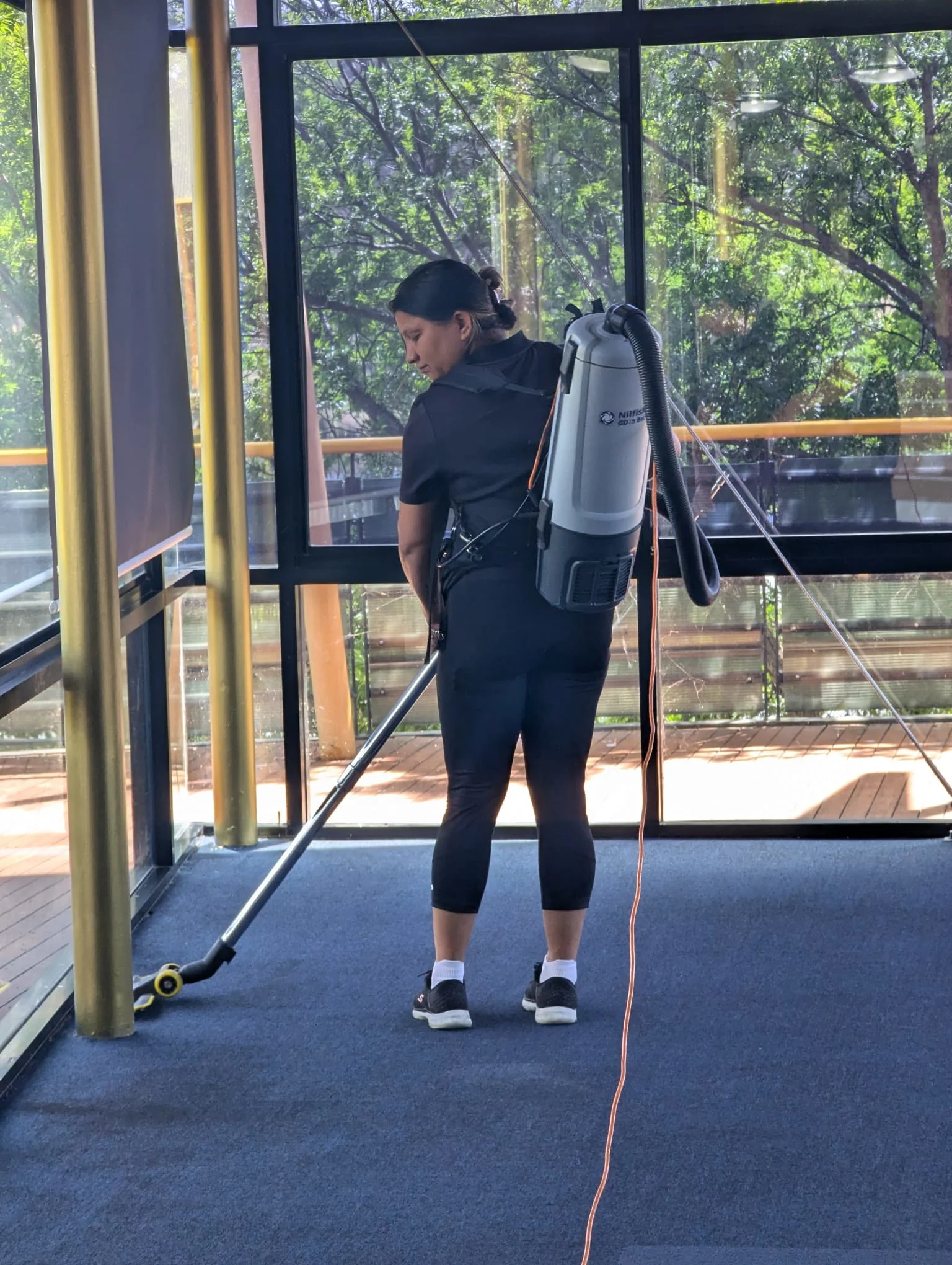
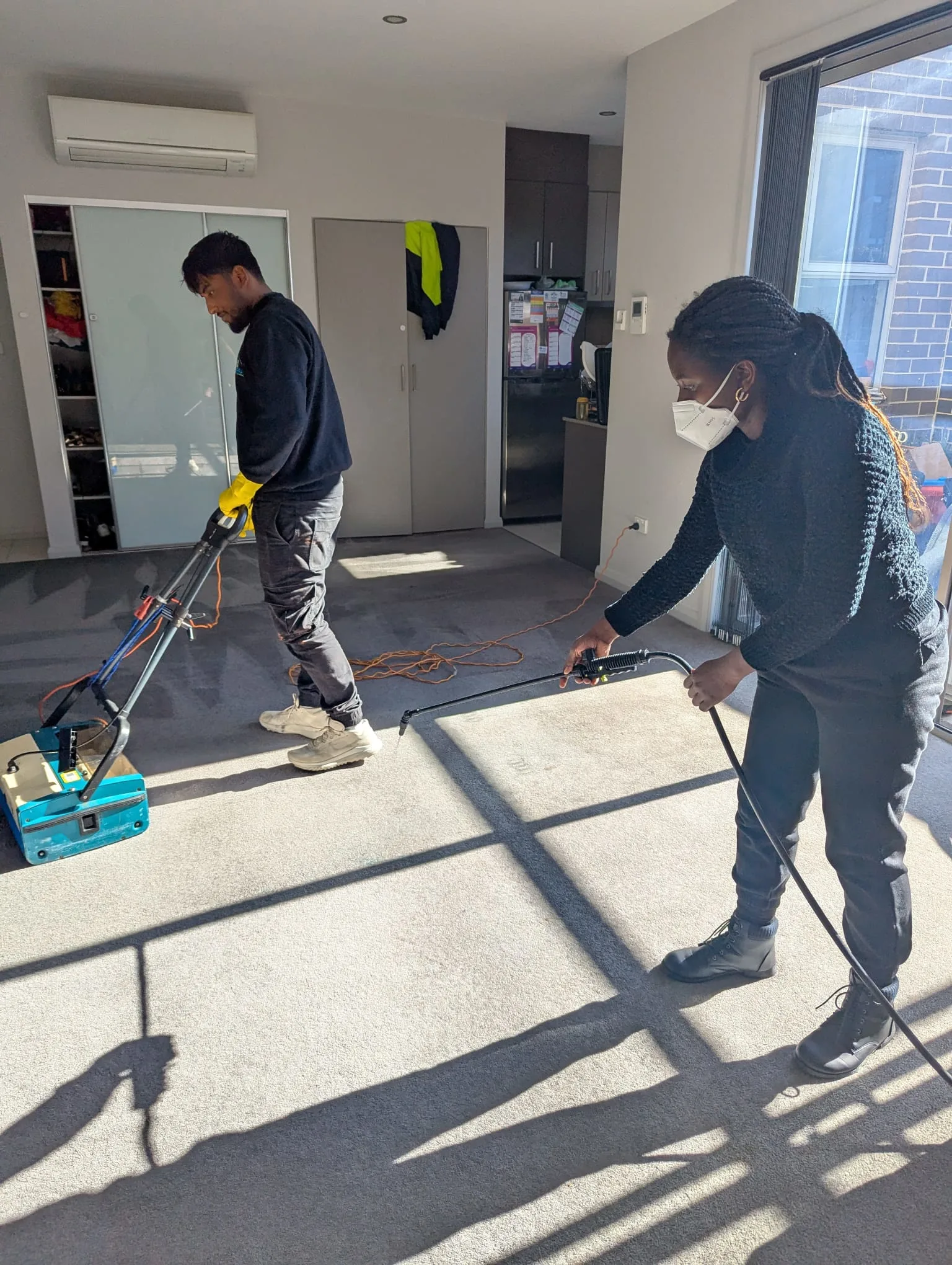
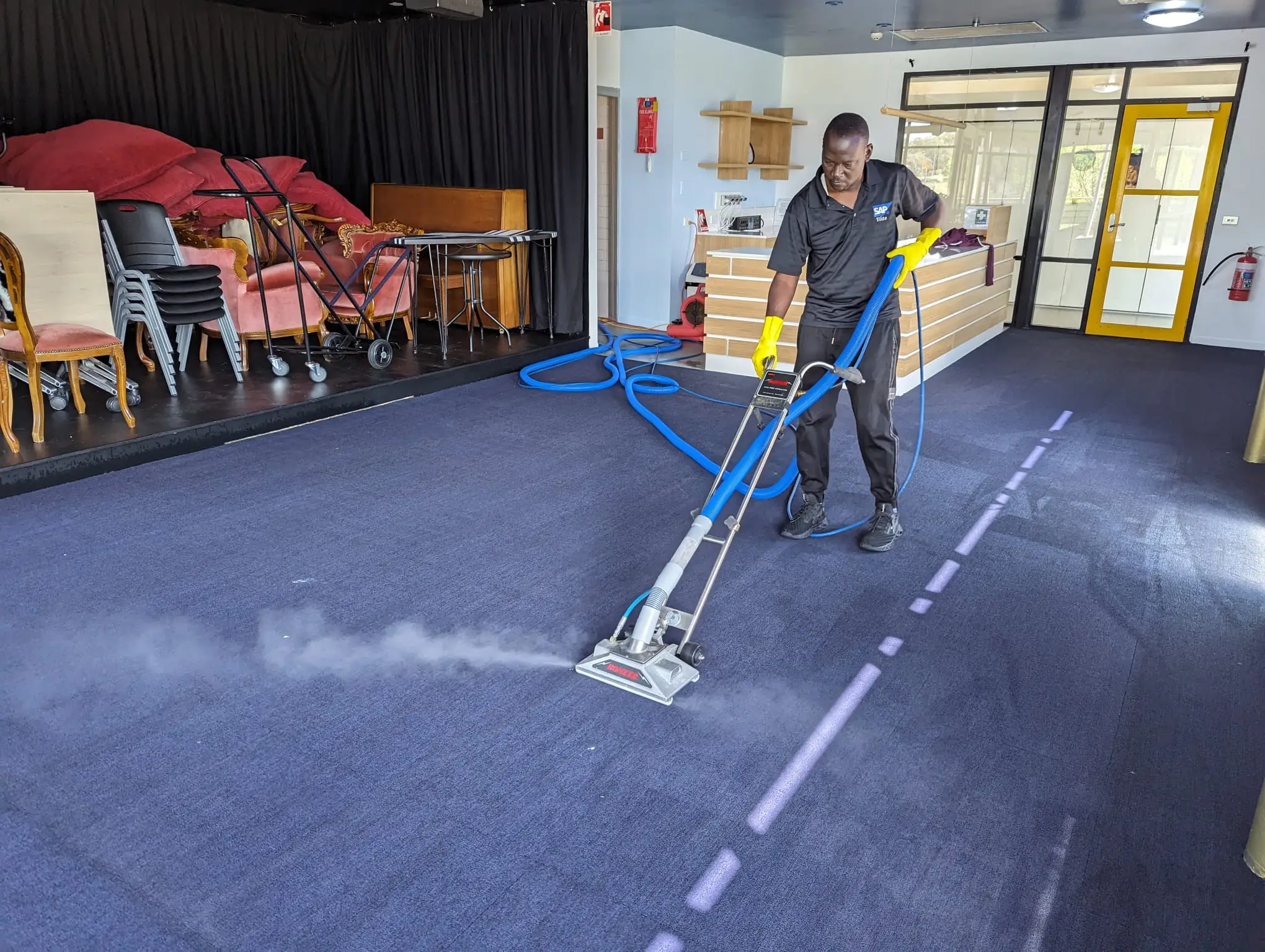
At Canberra’s Favourite Cleaner, we believe real work photographs are useful for showing customers what professional carpet cleaning equipment looks like in practice. Our carpet-cleaning photographs and video showa team member operating an extraction-style wand connected to hoses during a cleaning job.
The equipment is consistent with a water-extraction cleaning process. Our photos also show professional vacuuming equipment and an air mover.These images help demonstrate how specialised equipment is used during carpet cleaning and maintenance. They do not, by themselves, confirm the water temperature or every cleaning method offered by the business. When comparing carpet cleaning providers, it's worth asking about the process, carpet compatibility and expected drying requirements. To learn about our available cleaning services, visit our CarpetCleaningCanberra page.
Frequently Asked Questions
Is Carpet Dry Cleaning Better Than Steam Cleaning?
Not always. Steam cleaning can be suitable for deeper soil removal, while low-moisture methods are often useful for routine maintenance or situations where shorter drying times matter. The best option depends on carpet construction, condition and manufacturer guidance.
How Long Does Carpet Take to Dry After Steam Cleaning?
Carpets usually need several hours to dry after hot water extraction. CHOICE provides a general guideline of approximately six to eight hours with proper ventilation. Actual drying time varies according to moisture levels, carpet construction, temperature, humidity and airflow.
Can I Walk on Carpet Immediately After Cleaning?
That depends on the method used and the cleaner's aftercare advice. Avoid unnecessary traffic on damp carpet. If limited access is permitted, follow the provider's recommendations about footwear and other precautions.
Does Carpet Take Longer to Dry During Canberra Winter?
It can. Cold indoor temperatures and limited airflow may slow evaporation. Suitable heating, ventilation and air movement can help improve drying conditions.
What Should I Do if My Carpet Is Still Damp the Next Day?
Check the ventilation and temperature, and contact your cleaner if the dampness is unexpected. If the carpet remains very wet, smells musty or may be wet underneath, arrange an assessment rather than continuing to wait.
Need Professional Carpet Cleaning in Canberra?
Understanding the difference between steam and dry carpet cleaning can help you make a better decision for your property. Canberra’s Favourite Cleaner provides professional carpet cleaning for homes, apartments and businesses across Canberra, ACT. If you're unsure which approach is appropriate, tell our team about your carpet, its condition and any concerns before booking.
Explore Carpet Cleaning Services in Canberra
Further Reading
For independent information on carpet cleaning and care:
- Categories
- Carpet Cleaning Tips & Guides