Commercial Cleaning Checklist
 Canberra Admin
Commercial Cleaning Checklist & Schedule for Canberra Workplaces
A commercial cleaning checklist lists each workplace area, the tasks that need to be completed, how often they should be done and who is responsible. It helps businesses organise cleaning across offices, gyms, warehouses and community venues. The right schedule depends on staff numbers, visitor traffic and how frequently people use shared facilities.
What Should a Commercial Cleaning Checklist Include?
A useful checklist should answer four questions:
Which areas need cleaning?
What tasks need to be completed?
How often should each task be done?
Who is responsible for completing it?
For example, a busy office kitchen may need attention during every cleaning visit, while a rarely used meeting room might only need detailed cleaning once a week.
A practical checklist should include:
Workplace areas and individual rooms.
Cleaning tasks for each area.
Suggested cleaning frequency.
Responsibilities and assigned staff.
Cleaning products and equipment requirements.
Waste removal and consumable restocking.
Space for completion records and inspection notes.
Tonny's practical tip: Don't make one long checklist for the entire building. Divide it into areas such as reception, bathrooms, kitchens and workstations. It's much easier to see what's been completed and what still needs attention.
Commercial Cleaning Checklist by Workplace Type
Different workplaces have different cleaning requirements. An office needs attention to workstations and shared kitchens, while a gym has additional considerations around equipment, changing rooms and wet floors. Use these checklists as starting points and adjust them to your premises.
Understanding the frequency column
Every visit: Complete the task during each scheduled cleaning visit. This could be daily, weekly or fortnightly, depending on the cleaning arrangement.
Daily: Complete the task each operating day. If a contracted cleaner does not visit daily, the workplace may need to assign someone to handle it between visits.
Weekly: Complete the task once a week.
After use: Complete the task after an event or activity.
As needed: Complete the task when usage, visible dirt or site conditions require it.
Office Cleaning Checklist
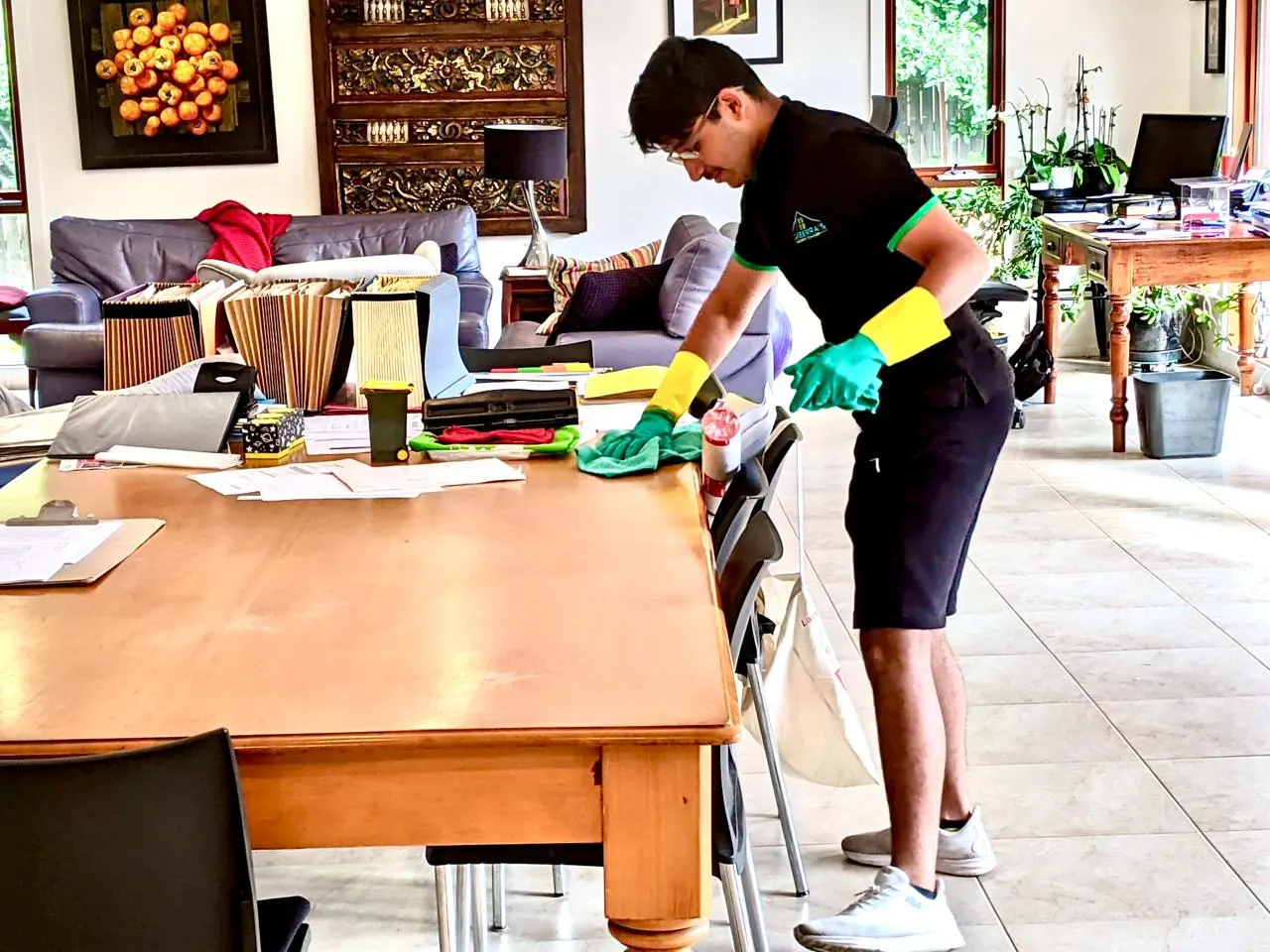
Office cleaning is easier to manage when tasks are divided by area and frequency. The following table provides a practical starting schedule for a typical workplace.
| Area | Cleaning Task | Suggested Frequency |
|---|---|---|
| Reception | Wipe counters, clean entrance floors and empty bins | Every visit |
| Workstations | Wipe accessible desk surfaces and empty bins | Every visit |
| Meeting rooms | Clean tables, remove rubbish and vacuum floors | Every visit or after heavy use |
| Kitchen and break room | Clean benches, sinks, taps and floors | Every visit |
| Bathrooms | Clean toilets, basins, mirrors and floors | Every visit |
| Door handles and touchpoints | Clean frequently touched surfaces | Daily |
| Internal glass | Remove visible fingerprints and marks | Weekly |
| Window sills | Remove accumulated dust | Weekly |
| Accessible furniture | Dust shelves and cabinets | Weekly |
| Carpeted areas | Vacuum and check for visible stains | Every visit |
| Hard floors | Sweep and mop suitable surfaces | Every visit |
| Less-used areas | Check for dust and accumulated dirt | Weekly or fortnightly |
Every visit means each scheduled cleaning visit, not necessarily every calendar day.A few areas may need more attention depending on staff numbers and visitor activity. A shared kitchen used by 30 employees, for example, will usually need more frequent attention than one used by five people.
Tonny's practical tip: Pay particular attention to kitchens, bathrooms and entrance areas. These spaces can become visibly dirty much faster than individual offices. If the same area keeps getting dirty between visits, consider adjusting the cleaning schedule.
Gym Cleaning Checklist
Gyms have different cleaning priorities because members share equipment, floors, showers and changing facilities.
The schedule should consider peak membership hours, equipment usage and the number of people using shared facilities.
| Area | Cleaning Task | Suggested Frequency |
|---|---|---|
| Exercise equipment | Clean shared handles and contact surfaces | Daily and during busy periods |
| Cardio equipment | Wipe accessible machine surfaces | Daily |
| Weight training area | Clean benches and shared equipment | Daily |
| Exercise mats | Clean and inspect for visible dirt | After use or according to facility procedures |
| Reception | Wipe counters and shared touchpoints | Daily |
| Changing rooms | Clean benches, lockers and accessible surfaces | Daily |
| Showers | Clean shower surfaces and floors | Daily |
| Bathrooms | Clean toilets, basins and mirrors | Daily |
| Gym floors | Remove visible dirt and clean suitable surfaces | Daily and when needed |
| Mirrors | Remove fingerprints and marks | Weekly or when needed |
| Less-used areas | Check for accumulated dust | Weekly |
Why peak-time cleaning matters
A gym may be quiet in the afternoon but become busy early in the morning and after work. During these periods, equipment and changing facilities can become dirty quickly. A mid-session check can help identify overflowing bins, visible spills and equipment that needs attention. Wet floors also create slip risks. Clean spills promptly using a safe procedure, and manage wet areas so members do not walk across unsafe surfaces.
Tonny's practical tip: Don't wait until the end of the day to notice a problem in a shared facility. High-use areas need attention based on actual member activity. A quick check during busy periods can prevent small cleaning issues from becoming bigger problems.
Warehouse Cleaning Checklist
Warehouse cleaning needs more planning because of large floor areas, storage arrangements, machinery and vehicle movement. The checklist should focus on accessible areas and identify spaces that require specialist procedures or additional authorisation.
| Area | Cleaning Task | Suggested Frequency |
|---|---|---|
| Walkways | Remove loose debris and check for obstructions | Daily or as required by site activity |
| Warehouse floors | Sweep accessible areas | Daily or as required by site activity |
| Loading areas | Check for visible dirt and waste | Daily or as required by site activity |
| Storage areas | Check accessible surfaces for dust | Weekly |
| Staff kitchen | Clean benches, sinks and floors | Every visit |
| Staff bathrooms | Clean toilets, basins and floors | Every visit |
| Attached offices | Clean workstations and suitable floors | Every visit |
| Waste collection points | Remove designated waste | Daily or as required |
| Windows and accessible glass | Remove visible dust and marks | Monthly or as needed |
| Less-used areas | Check for accumulated dirt | Weekly or fortnightly |
Important warehouse safety considerations
Cleaning should never interfere with warehouse operations.
Keep walkways and emergency access routes clear.
Do not move machinery or stored materials without permission.
Report leaks and unidentified spills rather than treating them as ordinary dirt.
Follow site procedures around chemicals and hazardous materials.
Use suitable equipment for the floor surface and cleaning task.
Tonny's practical tip: Before preparing a warehouse cleaning checklist, identify which areas cleaners can safely access. A warehouse floor, staff kitchen and attached office may need routine attention, but machinery zones and restricted storage areas require separate instructions.
Community Centre, Hall and Venue Cleaning Checklist
Community centres and venues often host multiple activities throughout the week. A room used for a morning class may be booked for a meeting later that day. That makes cleaning between bookings an important part of the plan.
| Area | Cleaning Task | Suggested Frequency |
|---|---|---|
| Entrance | Sweep or mop floors and wipe reception surfaces | Every visit |
| Main hall | Clean floors and remove rubbish | After events or every visit |
| Meeting rooms | Wipe tables and clean floors | After use |
| Kitchenette | Clean benches, sinks and shared surfaces | After use |
| Bathrooms | Clean toilets, basins and mirrors | Every visit |
| Chairs and tables | Wipe visible dirt and marks | After events |
| Hallways | Remove visible dirt and rubbish | Every visit |
| Internal glass | Remove fingerprints and marks | Weekly |
| Less-used rooms | Check for dust and accumulated dirt | Weekly or fortnightly |
Before and after an event
Before an event:
Check that the entrance and bathrooms are clean.
Check tables, chairs and shared facilities.
Make sure rubbish bins are ready for use.
After an event:
Remove rubbish and disposable items.
Clean tables and shared surfaces.
Check bathrooms and kitchen facilities.
Clean visible spills and floor marks.
Return furniture to the agreed layout.
Tonny's practical tip: For a venue with back-to-back bookings, build cleaning time into the event schedule. Don't assume the next group will have time to prepare the room themselves.
Daily, Weekly and Periodic Commercial Cleaning Schedules
A cleaning checklist identifies what needs to be done. A cleaning schedule tells you when to do it. The two work best together.
Suggested Daily Cleaning Tasks
Daily tasks generally focus on areas used frequently throughout the day.
Empty designated waste bins.
Clean shared kitchens and bathroom facilities.
Wipe frequently touched surfaces.
Vacuum or mop floors where needed.
Remove visible spills and dirt.
Check entrances, hallways and shared spaces.
Suggested Weekly Cleaning Tasks
Weekly tasks provide additional attention to areas that may not need cleaning during every visit.
Dust accessible shelves and furniture.
Clean internal glass and window sills.
Give meeting rooms additional attention.
Check less frequently used areas.
Inspect corners and floor edges for accumulated dirt.
Suggested Periodic Cleaning Tasks
Some surfaces need more than routine cleaning.
| Area | Maintenance Task | When to Consider It |
|---|---|---|
| Commercial carpets | Professional carpet cleaning | When dirt, stains or traffic marks build up |
| Internal and external windows | Window cleaning | When dust, fingerprints or weather marks become noticeable |
| Hard floors | Additional floor maintenance | Depending on flooring material and condition |
| Outdoor entrances | Pressure washing | When dirt and grime accumulate |
| Less-used areas | Detailed cleaning | During scheduled maintenance reviews |
For workplace carpets that have accumulated dirt or visible traffic marks, explore our commercial carpet cleaning in Canberra. For office glass, shopfronts and suitable business properties, see our commercial window cleaning services.
Tonny's practical tip: Don't wait until carpets or windows look badly neglected before planning maintenance. Review their condition during routine inspections and arrange additional cleaning when it is actually needed.
How Often Should an Office Be Cleaned?
There isn't one cleaning schedule that works for every office. A small workplace with limited staff may manage with fewer visits, while a busy office with shared kitchens, bathrooms and frequent visitors may need more attention. Consider these factors before deciding:
Number of employees and visitors.
Daily foot traffic.
Shared bathrooms and kitchen facilities.
Frequency of meetings and shared room usage.
Carpeted and hard-floor areas.
Workplace hygiene and safety requirements.
Operating hours and access arrangements.
The following table provides a starting point rather than a fixed rule.
| Cleaning Frequency | Example Tasks |
|---|---|
| Daily | Shared surfaces, bathrooms, kitchen checks and waste removal |
| Weekly | Detailed attention to meeting rooms and accessible furniture |
| Fortnightly | Additional cleaning of lower-use areas |
| Monthly or periodic | Maintenance reviews and planned specialist cleaning |
What does Australian workplace guidance say?
Safe Work Australia's Model Code of Practice, Managing the Work Environment and Facilities, states that workplaces and facilities should be cleaned regularly. It specifically identifies four factors to consider:
The type of work performed.
The likelihood of contamination.
The number of workers using the facilities.
The type of facility, such as eating areas, toilets, hand basins and showers.
This means cleaning frequency should reflect actual workplace conditions rather than follow one schedule for every business. Read the Safe Work Australia Model Code of Practice. For ACT-specific workplace safety information, consult WorkSafe ACT's workplace rights and responsibilities guidance. WorkSafe ACT also advises that spills should be cleaned up immediately, walkways kept clear, materials stored neatly and waste removed regularly. See its workplace housekeeping guidance.
How to Create a Commercial Cleaning Scope of Work
A commercial cleaning scope of work explains what should be cleaned, which tasks are included and how frequently the work will take place. Without a clear scope, both the business and cleaning provider may have different expectations.
What Should a Commercial Cleaning Scope of Work Include?
Include the following information:
Property details: Business name, address and type of premises.
Cleaning areas: Offices, bathrooms, kitchens, hallways and other spaces.
Cleaning tasks: Specific activities required in each area.
Frequency: Daily, weekly, fortnightly or periodic tasks.
Supplies and equipment: Who provides cleaning products and equipment.
Access instructions: Keys, security arrangements and preferred cleaning times.
Additional tasks: Specialist or extra cleaning requirements.
Exclusions: Tasks and areas outside the agreed scope.
Quality checks: How completed work will be reviewed.
Sample Commercial Cleaning Scope of Work
| Area | Cleaning Tasks | Suggested Starting Frequency |
|---|---|---|
| Reception | Surface cleaning, floor cleaning and waste removal | Every visit |
| Office | Desk surfaces, vacuuming and mopping | Every visit |
| Kitchen | Bench, sink and floor cleaning | Every visit |
| Bathrooms | Toilet, basin, mirror and floor cleaning | Every visit |
| Meeting rooms | Table cleaning and floor care | Every visit or weekly, depending on use |
| Shared areas | Surface cleaning and waste removal | Every visit |
| Internal glass | Fingerprint and mark removal | Weekly or as needed |
The frequency should be adjusted after reviewing the premises and the amount of daily activity.
Who Is Responsible for Each Cleaning Task?
Cleaning responsibilities should be clear before work begins.
| Responsible Person | Main Responsibilities |
|---|---|
| Business owner or facility manager | Define requirements and provide access instructions |
| Employees | Keep personal work areas tidy and report spills |
| Cleaning provider | Complete agreed tasks and report issues |
| Site supervisor | Review completed work and follow up on concerns |
For example, employees may be responsible for keeping their personal desks organised, while the cleaning provider handles agreed shared-area cleaning. If it isn't clear who owns a task, there's a good chance it will be overlooked. Write it down and make sure everyone understands their part.
How to Choose a Commercial CleaningCompanyinCanberra
A cleaning company should understand the type of workplace it will be looking after. Comparing prices alone won't tell you whether the proposed cleaning arrangement covers everything you need.
Questions to Ask Before Hiring
Have you cleaned workplaces similar to ours?
Which areas and tasks are included?
Can the cleaning frequency suit our operating hours?
Who provides cleaning products and equipment?
Are access and security arrangements understood?
Does the business have appropriate insurance?
How are missed tasks or complaints handled?
Are additional tasks and exclusions explained clearly?
Ask for a written scope of work so you can compare proposals fairly.
How to Compare Commercial Cleaning Quotes
| Comparison Point | What to Check |
|---|---|
| Cleaning scope | Are the same rooms and tasks included? |
| Frequency | How many visits are included? |
| Equipment | Are products and equipment supplied? |
| Labour | Is the expected work clearly explained? |
| Extra services | Are specialist tasks charged separately? |
| Timing | Are preferred cleaning hours confirmed? |
| Terms | Are changes and cancellation conditions clear? |
A cheaper quote may cover fewer tasks or less time. Compare the actual work included before making a decision.
How to Inspect Completed Cleaning Work
A cleaning inspection helps you check whether the agreed tasks have actually been completed. You don't need a complicated inspection system. A simple walkthrough and written record can be enough to identify recurring issues.
A Simple Workplace Cleaning Inspection Process
1. Walk through the workplace
Check the reception, offices, kitchen, bathrooms and shared areas.
2. Look at the results
Are the floors visibly clean? Have rubbish bins been emptied? Are shared surfaces free from obvious dirt?
3. Check frequently used facilities
Pay particular attention to bathrooms, kitchens and entrances.
4. Record missed tasks
Write down the area, the issue and the date. This makes follow-up much easier.
5. Discuss recurring problems
If the same task is repeatedly missed, review the cleaning scope or schedule with the provider.
6. Review the checklist
Update it when the workplace layout, staff numbers or cleaning requirements change.
Printable Commercial Cleaning Checklist (Copy and Adapt)
You can copy this checklist into a document or spreadsheet and customise it for your workplace.
| Area | Task | Suggested Frequency | Completed |
|---|---|---|---|
| Reception | Wipe counters and clean entrance floors | Every visit | ☐ |
| Office | Clean accessible desk surfaces | Every visit | ☐ |
| Meeting room | Clean tables and remove rubbish | Every visit or weekly | ☐ |
| Kitchen | Clean benches and sinks | Every visit | ☐ |
| Bathroom | Clean toilets, basins and mirrors | Every visit | ☐ |
| Gym | Clean shared equipment surfaces | Daily | ☐ |
| Warehouse | Check accessible walkways | Daily or as required | ☐ |
| Community hall | Clean tables and shared areas | After events | ☐ |
| Floors | Vacuum or mop suitable surfaces | Every visit | ☐ |
| Internal glass | Remove fingerprints and marks | Weekly | ☐ |
Make the checklist more useful by adding:
-
Cleaning date.
-
Name or initials of the responsible person.
-
Inspection notes.
-
Outstanding tasks.
-
Follow-up date.
The schedule is a starting point. Adjust it to reflect actual workplace use and the cleaning requirements of each area.
Frequently Asked Questions
How do I know if my cleaner is missing tasks?
Compare completed work with the written cleaning checklist. Look for recurring issues such as unemptied bins, dirty bathroom surfaces, missed floors or uncleaned shared areas. Record the date and location so you can discuss specific problems rather than relying on general complaints.
Is weekly office cleaning enough?
It can be enough for a small office with limited staff and visitor activity. However, kitchens, bathrooms and frequently touched surfaces may need more frequent attention. The right schedule depends on how quickly these areas become dirty.
What should be checked before cleaning a warehouse?
Identify accessible areas, walkways, loading zones, staff facilities and restricted spaces. Check site safety procedures before cleaning around machinery, chemicals or operational equipment.
Should a gym be cleaned during operating hours?
High-use areas may benefit from checks during operating hours, particularly during busy periods. The cleaning schedule should minimise disruption to members and ensure wet floors and spills are managed safely.
Who supplies workplace cleaning products?
This depends on the arrangement between the business and cleaning provider. The scope of work should clearly state who supplies products, equipment and consumables.
What is the difference between routine and periodic cleaning?
Routine cleaning covers regular tasks such as vacuuming, mopping, bathroom cleaning and waste removal. Periodic cleaning addresses tasks that are not needed at every visit, such as additional carpet care, window cleaning and specialist floor maintenance.
Need Help Planning Commercial Cleaning for Your Canberra Workplace?
A clear checklist makes it easier to understand what your workplace needs and how often those tasks should be completed. If you manage an office, gym, warehouse, community centre or venue, Canberra's Favourite Cleaner can discuss your cleaning requirements and preferred schedule.
Explore our Commercial Cleaning Canberra services or request a cleaning quote to discuss your premises.
About the Author
Tonny Mutagubya – Founder, Canberra's Favourite Cleaner
Tonny founded Canberra's Favourite Cleaner in 2018. The business provides commercial cleaning for offices, warehouses, gyms, community centres, venues and other workplaces across Canberra. This guide shares practical workplace cleaning recommendations to help businesses organise cleaning tasks, schedules and quality checks.
- Categories
- Cleaning Tips