Outdoor Tile Cleaner: Patio Tiles & Pavers Guide
 Canberra Admin
Outdoor Tile Cleaner: How to Clean Patio Tiles and Pavers Safely
The best outdoor tile cleaner depends on the tile material, its finish and the type of dirt you need to remove. A product suitable for porcelain may not be right for sandstone, concrete pavers or a sealed patio. Identify the surface first, then choose a cleaner labelled for that material. Outdoor areas collect everyday dirt, food and drink spills, leaf marks and organic growth. The right cleaning approach can improve the appearance of a patio, but using an unsuitable chemical or too much pressure can damage the tile, grout, joints or sealer.
Outdoor Tile Cleaning: Start by Identifying the Surface
Before choosing a patio cleaner, work out what the surface is made from. Outdoor patios may use porcelain, ceramic, natural stone or concrete pavers. They can look similar when dirty, but they do not all respond to the same products or cleaning methods.
Porcelain: often used outdoors because it is dense, but the finish, grout and installation still need consideration.
Glazed ceramic: the glaze can be affected by abrasive tools or unsuitable chemicals.
Natural stone: sandstone, limestone and travertine can be sensitive to acids and other incompatible cleaners.
Concrete pavers: the surface and jointing material may be affected by aggressive pressure or inappropriate products.
If you are unsure what the patio is made from, check the original product information or ask the supplier before applying a specialist cleaner.
What Is the Best Outdoor Tile Cleaner?
There is no single cleaner that works safely on every outdoor tile. The best choice is the product that is specifically labelled for your material and the type of contamination you are treating. Before buying, check the surface named on the label, the intended use, dilution and contact time, rinsing instructions, and any warnings about plants, pets, grout or nearby materials. If the product does not identify your surface as suitable, do not assume it is safe.
Which Type of Outdoor Tile Cleaner Should You Use?
1. pH-Neutral Tile Cleaners
A pH-neutral cleaner is often a sensible starting point for routine dirt on compatible tile and natural-stone surfaces. It is generally a gentler option than a strongly acidic or alkaline product, but it is not automatically suitable for every finish, grout or sealer. Check the manufacturer's guidance.
2. Alkaline Cleaners and Degreasers
Alkaline cleaners and degreasers are designed for oily residue, grease and some heavier grime. They may suit compatible concrete pavers and durable outdoor surfaces, but certain products can affect polished finishes, coatings or sealers. Confirm compatibility, test an inconspicuous area and follow the label.
3. Specialist Algae and Mould Treatments
Green or dark organic growth can develop where outdoor surfaces remain damp or shaded. Choose a treatment specifically labelled for outdoor hard surfaces and the material you have. Follow its contact-time and rinsing instructions, and protect nearby plants and drainage areas as directed.
4. Specialist Stain Removers
Rust and mineral deposits may need a specialist product. Do not select an acidic cleaner simply because the stain looks difficult. Some acids can etch natural stone, damage grout or affect coloured and sealed finishes. Use a specialist treatment only when its label and the surface supplier confirm compatibility.
Quick Guide: Choosing a Cleaner for Different Outdoor Surfaces
Porcelain tiles: Start with a cleaner approved for porcelain and a soft brush. Avoid abrasive pads that could affect the finish.
Glazed ceramic tiles: Use a compatible tile cleaner and non-abrasive tools. Pay attention to grout and any decorative finish.
Natural stone such as sandstone, travertine or limestone: Use a stone-specific product, commonly a suitable pH-neutral cleaner. Avoid unapproved acids and harsh treatments.
Concrete pavers: Choose a paver or concrete cleaner that is compatible with the surface. Take care around jointing sand, grout and any sealer.
Sealed surfaces: Check the sealer manufacturer's care instructions. A cleaner that strips or dulls the coating may leave the surface looking worse.
How to Clean Outdoor Patio Tiles Carefully
For routine maintenance, begin with the least aggressive approach that is suitable for the material.
Remove loose dirt. Sweep leaves, grit and soil from the patio so they are not rubbed across the surface.
Check the condition. Look for loose tiles, cracked grout, missing jointing material, flaking coatings or damaged stone.
Choose a compatible cleaner. Read the label and confirm that the product is suitable for the tile, grout and finish.
Test first. Apply the product to a small, inconspicuous area and check the result before treating the whole patio.
Use an appropriate brush. A soft or non-abrasive brush is a sensible starting point for many tile finishes. Do not use wire brushes or abrasive pads unless the surface supplier specifically permits them.
Rinse and manage runoff. Follow the product instructions and keep contaminated water away from garden beds and stormwater drains.
Allow the area to dry. Check the finish and grout once dry before deciding whether any further treatment is needed.
Do not mix cleaning products. Combining chemicals can create dangerous reactions, and using a stronger mixture does not necessarily produce a better result.
Pressure Washing vs Soft Washing: What Is the Difference?
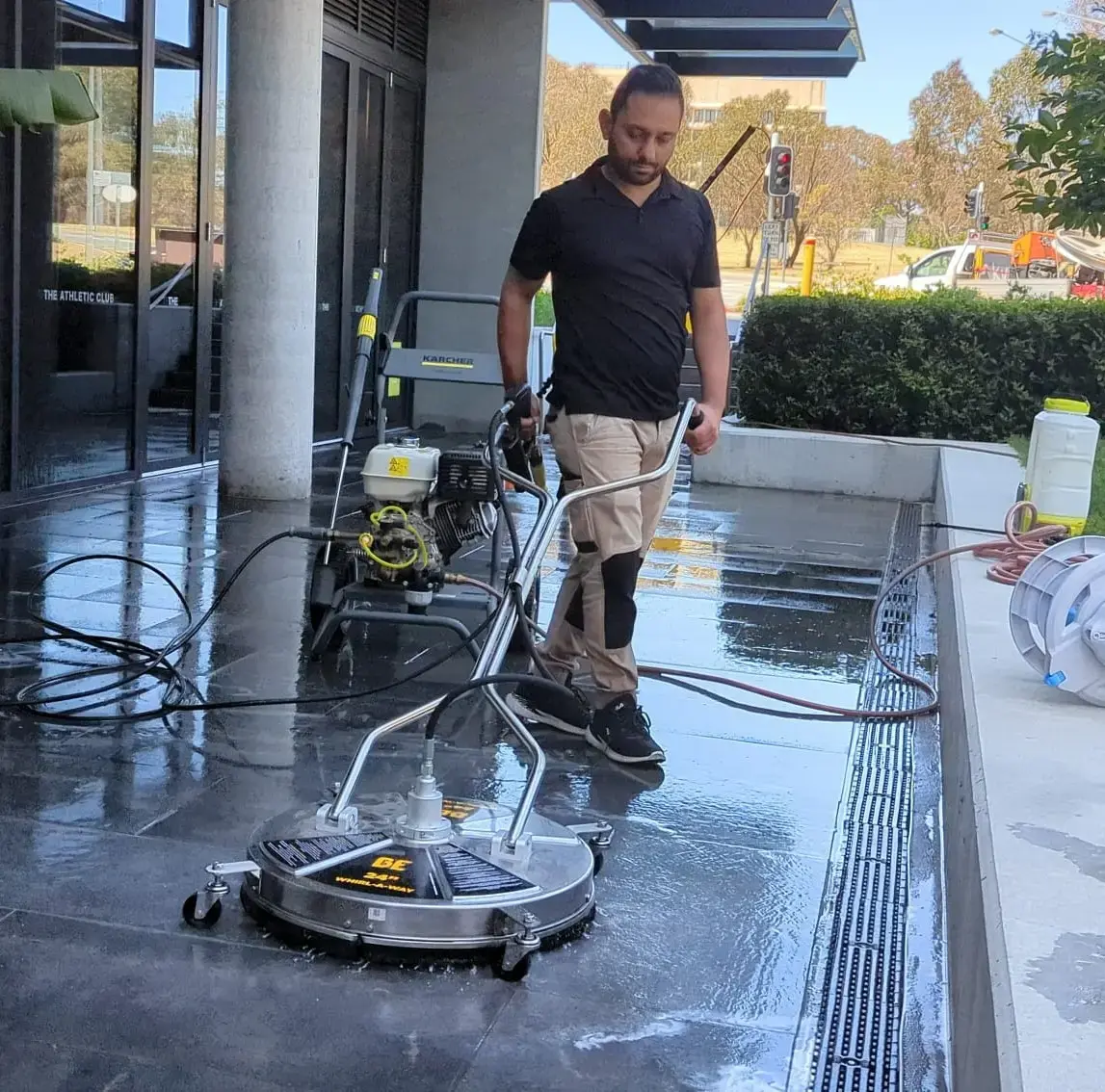
Pressure washing uses a concentrated flow of water under pressure to remove dirt and surface build-up. Soft washing generally refers to a lower-pressure method that relies more on an appropriate cleaning solution and controlled rinsing. Neither method is automatically right for every patio. The material, surface condition, grout, joints and surrounding landscaping all matter. High pressure may disturb paver joints, damage fragile grout or mark some natural stone and decorative finishes. A lower-pressure approach may be more suitable for delicate surfaces, but the cleaning product must still be compatible. The important point is to match the method to the surface rather than choosing the strongest setting. Do not assume that a surface is safe to pressure wash simply because it is outdoors.
Can You Pressure Wash Concrete Pavers?
Some sound concrete pavers may be suitable for controlled pressure cleaning, but the condition of the pavers and their joints needs to be considered. Excessive pressure can remove jointing sand, expose aggregate or leave marks. If the pavers are loose, cracked, coated or deteriorating, seek advice before cleaning.
Common Outdoor Tile Cleaning Mistakes
Using one strong cleaner on every type of tile.
Applying acid to natural stone without checking compatibility.
Using abrasive brushes on glazed or polished finishes.
Directing high pressure at grout lines or paver joints.
Mixing cleaning products or ignoring label instructions.
Allowing dirty chemical runoff to enter garden beds or stormwater drains.
When Should You Get Professional Advice?
Consider professional advice if you cannot identify the surface, the patio has natural stone or a delicate finish, the grout or paver joints are failing, or the area has stubborn staining or widespread organic growth. A surface assessment can help identify a suitable method before cleaning begins. If you are comparing options for an outdoor hard-surface clean, link the phrase pressure washing in Canberra to your existing service page. Do not imply that your team offers soft washing unless the owner has confirmed that service.
Frequently Asked Questions
What is the best cleaner for outdoor patio tiles?
It depends on the material and the type of dirt. Start with a product labelled for your specific tile and follow the manufacturer's instructions.
Can I use the same cleaner on porcelain and sandstone?
Do not assume so. Porcelain and natural stone have different care requirements. Check that the product is approved for the exact surface.
Can you use vinegar on outdoor tiles?
Vinegar is acidic and may damage acid-sensitive natural stone, grout or some finishes. Do not use it unless the tile or stone supplier confirms it is suitable.
Can pressure washing damage patio tiles?
Yes. Excessive pressure can damage some finishes, grout and paver joints. The surface material and condition should guide the cleaning method.
How do I clean green growth from patio tiles?
Use a treatment labelled for outdoor hard surfaces and compatible with your tile material. Follow the label and protect nearby plants and drainage areas.
Is a pH-neutral cleaner safe for every outdoor surface?
No. It is often a gentler starting point, but compatibility still depends on the tile, finish, grout and sealer.
Need Help With Outdoor Tiles or Pavers?
If you are unsure which cleaning method is suitable, take a few clear photos of the patio and note the surface material if you know it. Include your suburb when requesting a quote so the team can review the job and discuss the next step.
Request a free, no-obligation quote. Call 0413 382 774 or use the website's quote form.
Explore More Cleaning Services in Canberra
Looking for professional cleaning assistance in Canberra? Explore Canberra's Favourite Cleaner to learn more about our business and services. Discover our cleaning services in Canberra, including our pressure washing service. You can also browse our cleaning gallery to see examples of our work, learn more about our cleaning team, and explore more cleaning tips andguides. For questions about your outdoor cleaning requirements, contact our team or request a free cleaning quote. Read ourstormwater management guide for more information.
- Categories
- Cleaning Tips